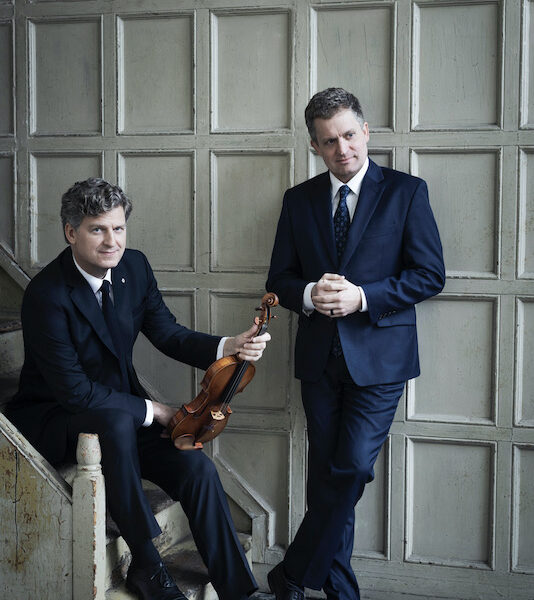
1) Victor Toma, and Gryphon Trio program notes:
When they first met in Paris in the 1840’s, Liszt was an international superstar, while Wagner was a largely unknown opera composer. Liszt took Wagner under his wing, actively championing his music, conducting his operas and writing virtuosic piano transcriptions of his works, such as the Liebestod from Tristan und Isolde. In doing so, he strove to make Wagner’s music known to a wider audience. When Isolde sings her “love-death” song and discovers that her lover Tristan is dead, she contemplates sinking unconscious into supreme bliss and finally consummating her love with him. Liszt’s masterful transcription requires much of the pianist–not only the ability to execute the challenging pyro-techniques involved but also to produce a beautiful line with exceptional control to and capture the surging chromatic yearning conveying the meaning of the song’s words. Schumann remarked that Liszt’s transcriptions were perhaps the most difficult music written for the piano up to that time.
Rachmaninov’s piano music, which was designed for his own massive hands, is renowned for its sweeping melodies, rich harmonies and extreme virtuosity. Completed in 1931, the Variations on a Theme of Corelli was the only work for solo piano he wrote after leaving Russia in 1917. Despite the mention of Corelli in the title, the traditional melodic and harmonic sequence known as La Folia is the basis of this piece. The stately, sarabande-like theme is followed by twenty variations, divided into three movements, leading to the final coda. In his performances, the composer often omitted some of the variations. To a friend he confessed, “I was guided by the coughing of the audience. Whenever the coughing increased, I would skip the next variation. When there was no coughing I would play them in proper order.” In effect, the variations grouped themselves into a quasi-four-movement sonata. They appear to have been a catalyst for his next new work, the Rhapsody on a Theme of Paganini for piano and orchestra–another cornerstone of the classical repertoire.
Written for The Gryphon Trio by Composer-in-Residence Carmen Braden, Candle Ice
was premiered at the Ottawa International Chamber Music Festival in 2014. The following are the composer’s own words: “Candle Ice…evokes the final melting phase of the ice on Great Slave Lake in Northern Canada. In the spring, the thick ice melts into long, interlocking shards which are called candle ice. These crystalline shapes are pushed by the wind and waves to jostle against each other, creating beautiful masses of sound or delicate individual sound events with a glassy or metallic timbre. The candle ice exists only briefly during the ice season, and eventually disintegrates and melts into lakewater…I believe that the ice formed in the North’s long winters is a quasi-biotic phenomenon, one that embodies a spiritual and ontological bridge between living and elemental forces. I believe the ice has a voice, and the sounds it produces in its natural state are an ongoing ecological form of music. My approach to the use of these sounds is a borrowing or re-performance of this music.”
Beethoven’s Piano Trio, Opus 1 No. 1 established the composer as an important musical force in his newly adopted home of Vienna. Begun in his native Bonn and refined during his brief study with Haydn, he took this popular form of entertainment and enlarged its dimensions, adding a fourth movement when three were the prevailing standard. While the opening movement exudes Mozartean grace, it also features a more expansive coda, dramatic dynamic contrasts and textural richness, developments which became hallmarks of his style. In the expressive slow movement, the piano leads, with the violin and cello weaving around the melody. The third movement replaces the traditional minuet with a playful Scherzo which highlights Beethoven’s rhythmic drive and abrupt comedic pauses. The presto Haydn-esque rondo Finale suggests “Gypsy” fires and structural wit, bringing the trio to a brilliant close.
One of Dvořák’s most impassioned chamber works, his Piano Trio in F minor, No. 3, was composed in 1883, shortly after the death of his mother. Steeped in a notably darker, more dramatic and introspective tone compared to his earlier folk-inspired works, it is a hybrid not only of European classicism and romanticism but also of Slavic nationalism as well as his own unique personality. Some passages are reminiscent of Brahms and Schubert, especially in the outer movements. The dramatic, brooding opening Allegro conveys a wide range of moods, from struggle to hope. Where the piano is at full bore, the writing is dense and orchestral. The furiant, an energetic Bohemian dance of Slavic character, is featured in the Scherzo with heavy accents and strong cross rhythms. What follows in the Adagio is an elegy blending majesty and sorrow. The Finale begins with a return of energy and the rhythmic ferocity of the furiant, but then the first movement’s opening theme and the sublime slow movement are recalled before achieving a triumphant, cathartic resolution in F major.
2) Notes for concert 2, Les Violons du Roy:
Published in Venice in 1615, Tarquinio Merula’s Ciaccona a tre originally emerged as a lively,
‘dance-song’ imported into Europe from the Spanish colonies in the New World. Merula’s composition is one of the earliest known purely instrumental chaconnes. He helped transform it from a crude popular dance into a sophisticated artful chamber music work, setting the stage for later composers such as Monteverdi, Purcell and Bach. The piece is scored for two violins and basso continuo. It plays the endlessly repeating chord sequence against which Merula weaves increasingly complex, syncopated and virtuosic variations for the violins.
Bach’s Trio Sonata in G major, BWV 1039 is remarkable for its intricate phrasing and masterful counterpoint. Originally scored for basso continuo and two flutes, the latter were subsequently replaced by two violins. This sonata da chiesa is celebrated for its interwoven melodies and playful contrapuntal dialogue.The pastoral mood of the opening Adagio is characterized by flowing movement with sustained tones. In contrast, imitative fugal counterpoint creates a sparkling energetic movement in the Allegro ma non presto. The Adagio e piano movement evokes a haunting, mysterious mood which explores unpredictable harmonies, while the fast-paced, rhythmic Presto brings the work to a joyous conclusion.
Handel’s Trio Sonata in G minor, Opus 2 No. 5 is renowned for showcasing the era’s counterpoint and expressiveness. In the opening Adagio, the continuo provides slow resonant harmonic anchors while the violins move in intertwined lyrical lines. There is a shift in the Allegro into a quick contrapuntal texture, with the two violins trading motives rapidly and the continuo providing a nimble walking bass. The third movement Adagio serves as a somber, expressive interlude, achieved partly by heavier suspensions and dissonances in the violins while the harpsichord arpeggiates the underlying chords. The work ends with a virtuosic dance-like Finale in which the violins take turns with running sixteenth note patterns punctuated by rhythmic support from the basso continuo.
Another celebrated Baroque masterwork is Henry Purcell’s Fantasia upon a Ground in Three Parts, Z.731 Over a repeating bass line, the composer brilliantly layers overlapping melodies, creating an intricate display of counterpoint. As the ground bass repeats, the violins perform elaborate, intertwining and overlapping variations above. It moves through a dramatic array of emotions typical of Purcell, shifting seamlessly between lively rhythmic interplay and melancholic suspended harmonies as the variations develop.
Composed for viola da gamba and obligato harpsichord, Bach’s Sonata in D major, BWV 1028 explores the full lyrical and contrapuntal capabilities of both instruments. In the Adagio, a brief and expressive opening establishes a lyrical conversation between the viola da gamba and the right hand of the harpsichord player.The Allegro features a lively fugal movement where the two instruments exchange complex contrapuntal lines. Featuring a graceful almost operatic melody, the Andante acts as the emotional and melodic core of the sonata. The final Allegro is a vibrant, contrapuntal and joyful conclusion, built on highly rhythmic material that drives to the end.
Ganz kleine Nachtmusik (A Very Little Night Music), also known as Serenade in C, was written by Mozart when he was a teenager, apparently before his first trip to Italy. It consists of seven miniature movements for a string trio lasting about 12 minutes. It might be identical to the “Little Night Music K. 41g” or the lost Cassation in C, K.653. While compiling the Köchel catalogue’s newest edition–an authoritative list of all Mozart’s documented musical works–researchers rediscovered the previously unknown piece from the Carl Ferdinand Becker collection in Leipzig’s music library.
François Couperin wrote Le Parnasse, ou L’Apothéose de Corelli as a tribute to the Italian master Arcangelo Corelli. This programmatic trio sonata blends the structured elegance of the French Baroque tradition with the fluid expressive lyricism of Italian chamber music, thus serving as a manifestation of Couperin’s les gouts réunis–the united styles. Scored for two violins and basso continuo, there are seven distinct sections with each section featuring a picturesque, descriptive narration of Corelli’s journey to Mount Parnassus–the mythological home of poetry, literature and music–where he is received by the Muses and granted artistic immortality.
3) Notes for The New Orford String Quartet:
One of the masterpieces of late 18th century chamber music is undoubtedly Joseph Haydn’s String Quartet in D major, Opus 76 No. 5. Following the gentle melody that opens the Allegretto is a conversational exchange between the instruments, leading into a brilliant passage for the first violin. The second movement titled Largo, cantabile e mesto is the emotional heart of the quartet. Conveying a melancholy mood, it alternates between hymn-like major key passages and dark minor key turns which evoke a spiritual and hauntingly beautiful atmosphere. The third movement is an elegant Minuet, followed by the minor key Trio which is notable for its dark rumbling cello waves. The high energy Finale begins the movement with one of the composer’s ‘jokes’–six bars that sound exactly like a definitive ending chord! Comedic starts and stops, dizzying counterpoint and virtuosic flourishes characterize the action-packed conclusion of this quartet, which with its incredible ferocity, laconic wit and harmonic daring seem to defy the image of the composer as “genial Papa Haydn.”
Felix Mendelssohn’s final major completed work, his String Quartet in F minor, Opus 80 was written as a requiem following the sudden death of his beloved sister Fanny, with whom he had had a very close relationship. Physically and emotionally shattered, he retreated to Switzerland to recover and channeled his grief, anxiety and anger into this quartet. The first movement begins with shuddering string tremolos, which eventually calm down, but never actually settle into anything truly peaceable. With a return of the tremolo figure, there is a substantial exploration of the movement’s opening material that covers a wide range of harmonic areas, and draws on Mendelssohn’s skills as a contrapuntalist. The grim mood continues in the second movement, a brisk Scherzo that features off-kilter syncopations and a foreboding, deeply intense trio section. Serving as the emotional core of the quartet, the third movement Adagio acts as a somber elegy filled with warm, intertwined string textures that seem to mourn Fanny’s passing. Completing this unrelentingly dark composition is the Allegro molto finale, a virtuosic tour de force overflowing with surging waves of sound and angry unresolved tensions. Tragically, just two months after completing it, Mendelssohn suffered a series of strokes and died at the age of 38.
Russian composer Alexander Glazunov’s String Quintet in A major, Opus 39 is a major late-Romantic chamber work, celebrated for its rich sonorous textures and deep Slavic melodic character. Glazunov scored the piece for two violins, one viola and two cellos, unlike the second viola structure favoured by Mozart. Using two cellos gives the ensemble a deeper tonal weight, allowing one cello to anchor the bass line while the other sings in its expressive upper register. In the opening Allegro, the sweeping first theme is introduced elegantly by a lone viola in a 9/8 time signature while the highly lyrical second theme transitions into a 3/4 meter. The second movement Scherzo (marked Allegro moderato) is primarily driven by a lively rhythmic use of pizzicato that alternates with bowed staccato lines and frames a more mournful contrasting trio section in the middle. The deeply romantic and sentimental third movement, Andante sostenuto, begins with a yearning melancholy cello that shifts into intense dramatic chords before resolving peacefully. The Allegro moderato finale is a bold, high-spirited rondo infused with vibrant Russian folk-music colours and a powerful driving theme, bringing the work to an exhilarating conclusion.
4) James Ehnes concert program notes:
Often referred to as Suite im alten Stil (Suite in the Old Style), Christian Sinding’s Suite in A minor, Opus 10 is a cornerstone of the romantic violin repertoire. Originally composed for violin and piano, it was later orchestrated by Sinding himself. This three-movement neo-Baroque piece balances virtuosity with lyrical charm. The technical challenges of the opening Presto movement are balanced by the lyrical, deeply expressive Adagio movement that often highlights the violin’s upper register. Virtuosity is paramount in the spirited, rhythmic Tempo giusto movement which brings the suite to an exciting and satisfactory conclusion.
Johannes Brahms’ Violin Sonata No. 3 in D minor, Opus 108 is the final and most dramatic of his three violin sonatas, and stands out as his only violin sonata written in a minor key. Characterized as a work of immense technical virtuosity and tense emotional depth, it contrasts sharply with the lyrical sweetness of his previous two sonatas. The breathless opening of the Allegro launches immediately into an intense, tragic main theme. Notable is the unique structural design of the development section which is built entirely over a continuous low dominant pedal point played by the piano. Featuring a deeply expressive instrumental song for the violin, the Adagio provides a brief serene moment of warmth in an otherwise turbulent piece. The third movement, Un poco presto e con sentimento, acts as a delicate, melancholic intermezzo rather than a traditional scherzo, conveying a playful and hauntingly quiet character. The Presto agitato drives the sonata to a brilliant conclusion, requiring supreme virtuosity from both the violinist and the pianist. Premiered by violinist Jeno Hubay alongside Brahms himself at the piano, it remains a cornerstone of the standard chamber music repertoire.
Like much of Bartók’s music, his Rhapsody No. 1 for Violin and Piano, Sz. 86 is based on Hungarian folk music, which intrigued him both as a composer and as an academic researcher who had traveled the countryside collecting tunes.The Rhapsody consists of two movements taken from the Hungarian csárdás. The slow, moderately paced Lassú is characterized by an improvisatory, contemplative nature and is filled with expressive dramatic folk melodies. In contrast, the Friss, marked Fast-Allegretto-moderato is an energetic rhythmically complex movement featuring electrifying dance rhythms and driving virtuosity. Drawing the melodic themes directly from his extensive academic fieldwork collecting ethnomusicological field recordings, he blended authentic Hungarian and Romanian folk tunes. To mimic traditional village fiddlers, the piece uses distinctive multiple stops, drone harmonies and specific ornamentation found in rural folk styles. Composed in 1928, it transplants the raw energy of Eastern Europe folk fiddling into the Western concert tradition.